COMMUNITY HERBAL INTENSIVE LEVEL 2
Inspired by place, heritage, and bioregional herbalism
Experience Healing Plants
Getting Rooted is guided by the seasons with twelve online sessions, monthly lessons, personalized seasonal assessments, and four seasonal retreats.
The course opens during the shift into the Dark Season in November acknowledging the long history of humans celebrating ancestors for guidance as they faced the long nights of winter.
The program ends in October celebrating the bounty of the harvest, gratitude for family, friends or tribe, and honor for those who came before us.
Each month includes online sessions, activities, and reading materials:
deepen your understanding of the foundations of herbalism to guide you as you bring medicinal plants into your daily life
explore seasonal traditions from different cultures that have influenced North American herbalism
get 4 personalized seasonal assessments
join live online discussions each month
practice techniques used in herbalism to make a variety of elixirs and balms for natural healing
enjoy activities to celebrate herbs, enrich your mind, and stimulate your senses
work through two Materia medica sheets to document your experiences with the plant
try recipes and ratios with guidance on how to use them
monthly herbal safety tips will help you stay safe and well as you experiment with herbs
plus each lesson includes suggestions for further explorations into specialized topics and activities
CHI2 will be a small group and we will work together to schedule the weekend retreats. For each retreat we will meet at an agreed upon location and spend the weekend together practicing herbal techniques, preparing food, and following the schedule below. The cost of the weekend retreats will vary depending on the group's decisions on where to stay and what to eat. Proposed locations include the Trillium Center in Conneaut, Ohio; Arc of Appalachia; Hocking Hills area in southern Ohio; Mohican State Park; Headlands Beach State Park; Cuyahoga Valley National Park; Serpent Mound or other proposed locations.
The first retreat will be in the late winter. The topics will include a overview of herbal assessment techniques, health behavior, and a review of energetics and herbal actions so that participants can learn to match herbs to individuals.
The second retreat will be in the spring. We'll focus on case studies putting the concepts from the first retreat into practice, an overview of the endocrine system, and ways to test for herbs.
The third retreat will be in the summer. We'll practice more case studies, learn a bit of herbal chemistry, and get into the nitty gritty of herbal formulation.
The last retreat will be in the fall. We'll continue with case studies and formulation, refining our techniques with a focus on choosing methods of herbal preparation such as when to use tinctures vs teas or compresses vs soaks.
"CHI 2 - Getting Rooted" opens during the shift into the Dark Season in November acknowledging the long history of humans celebrating ancestors for guidance as they faced the long nights of winter.
The course starts with this introductory section before delving into the seasons. The introductory materials include downloadable ebooks for herbal safety and ethical sourcing for herbs, thoughts on reconstructing heritage and understanding that we all come from indigenous roots (some of us have to dig a little deeper to find them), perspectives on reality, and activities for enhancing your sense of heritage and cultural roots.
"CHI 2 - Getting Rooted" has three parts:
Twelve live online sessions scheduled as a group.
Monthly emails to let you know the reading materials, activities, and resources are available.
Four personalized seasonal assessments (to be scheduled individually).
Four in-person retreats to be scheduled as a group. Updates on retreats will be sent via email, so be sure to update your calendars when you receive updates.
You can take your time to go through the introductory materials, but I encourage you to read the herbal safety book first.
I look forward to learning more about you and reading your stories.

Many words to describe Oneness get thrown around in various healing circles: holistic, homeostasis, ecological, interconnectedness, vitalism, and more. All is One will integrate these ideas into practical thought patterns and activities to remain mindful of the big picture when developing or enhancing a personal, community, or clinical herbal practice. We start in November, a time to reflect on those who came before us and preparation for the dark days of winter.
In the ancient far North, there were two major holidays: the transitions between the dark and the light. Being near the poles, rather than the equator, changes culture, lifestyle, and relationship with the natural world. Fire and Ice will delve into the physical and cultural aspects of extreme temperatures and relationship with light and dark and translate that into practical ways to apply temperature and light, density and weight in herbalism and hydrotherapy. December is a time to prepare for the winter holidays and to experience the longest nights of the year.

Troika means “three” in Russian and it also applies to a certain method of harnessing three horses. The Troika goes beyond the three body types by addressing three levels of awareness and thought process, three principles of existence (spirit, mind and body), three stages of life, and the three aspects of time (past, present, future). January is often a time of reflection with the end of the calendar year, a time to take a look at where you’ve been, where you are and where you’re going.
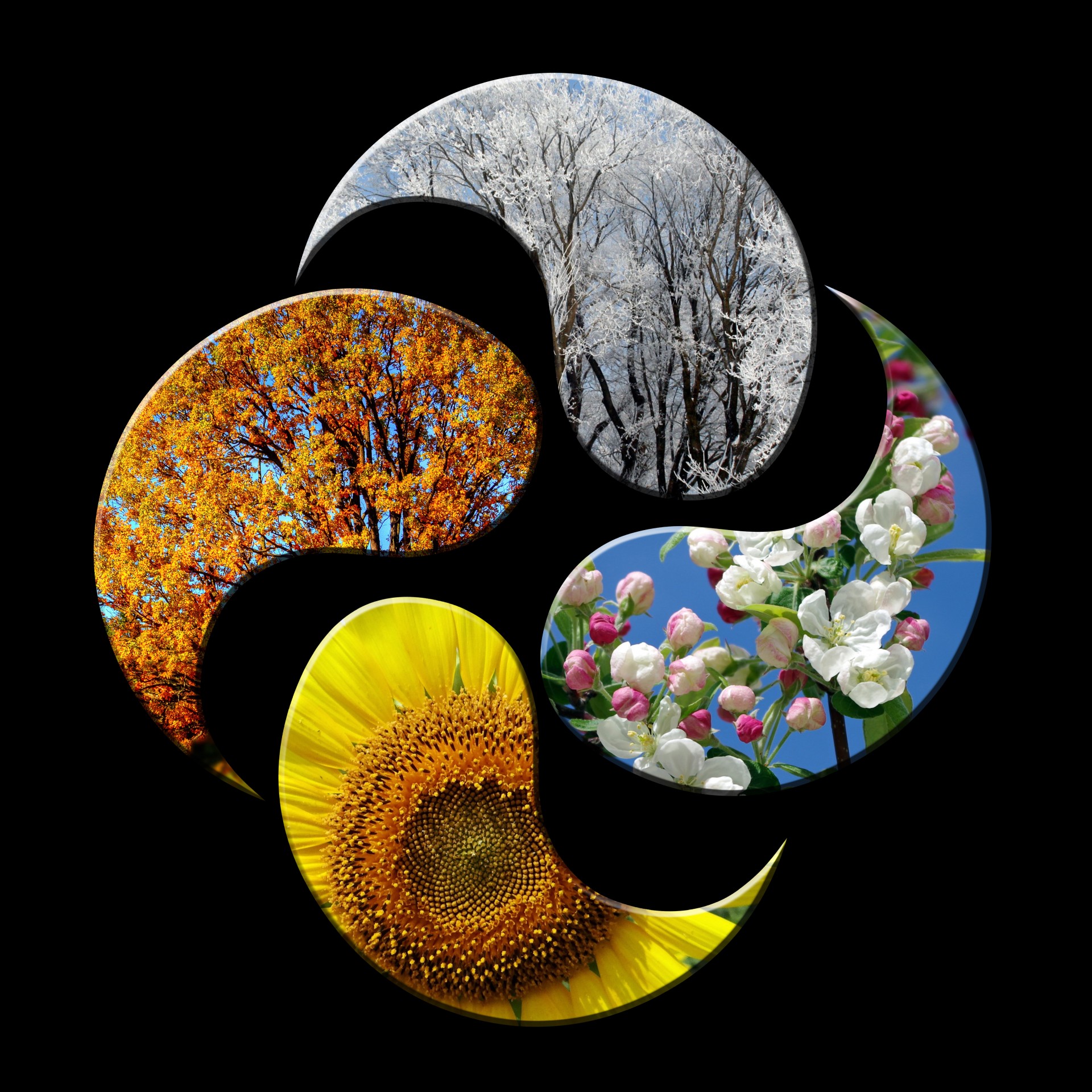
Much of the Northern hemisphere experiences four seasons and many healing traditions incorporate four healing principles into practice: the four directions, the four seasons, or the four elements. The four elements are Air, Water, Fire & Earth. Herbs and other healing substances such as clay and salt are categorized according to the elements. The organs, tissues, and conditions of the human body are also categorized this way. The Four Seasons and the Fifth Element section begins the discussion of applying elemental patterns to the body to determine which herbs and how they should be used. February is when we see a shift in the angle of the sunlight in the trees, a time to start looking forward and outward after the shortest days of winter.
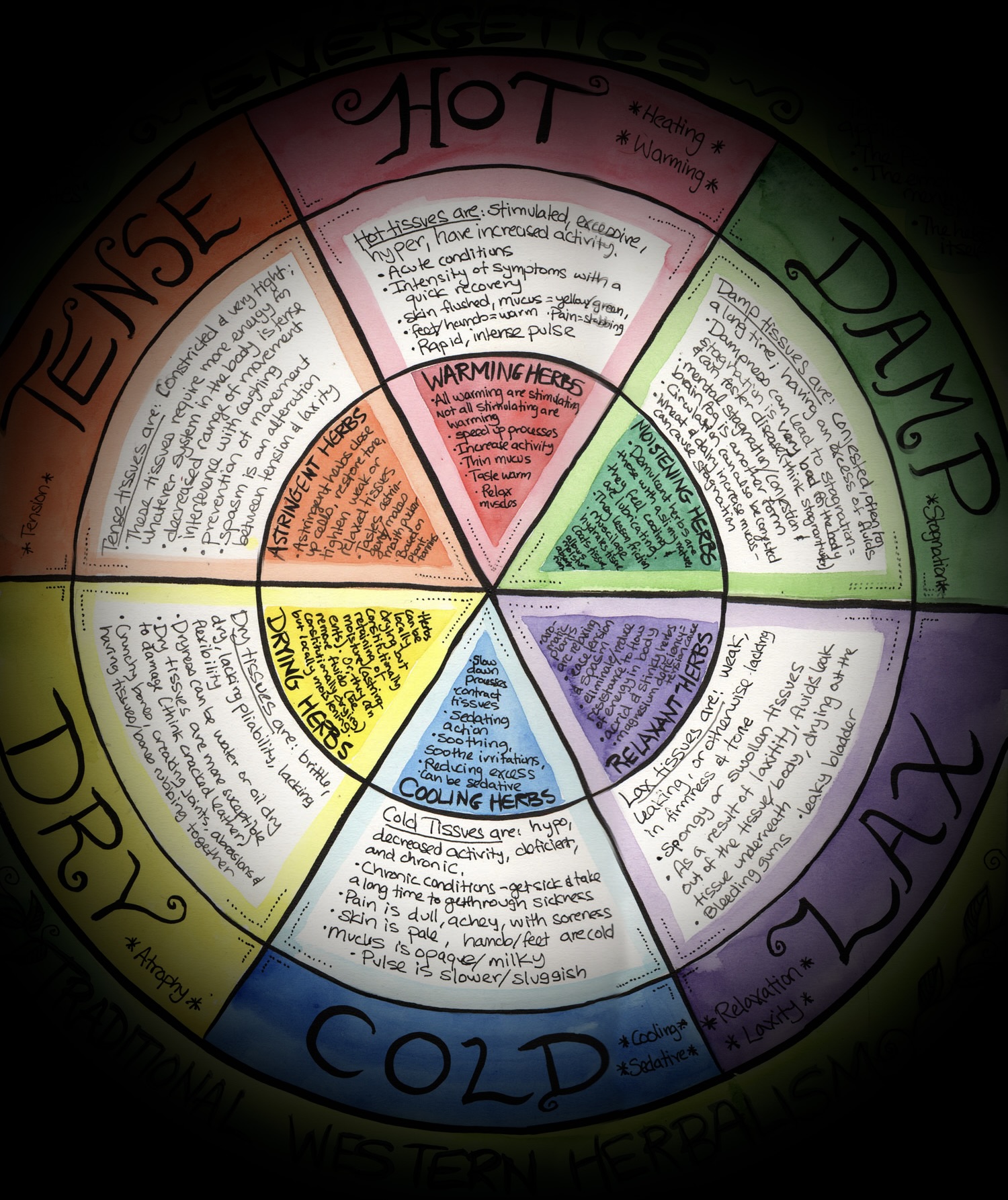
Categorizing the state of a tissue is vital to understanding which herbal action to match to it. Some form of the six tissue states is used by many traditional herbalists. Patterns in the six tissue states often emerge in relation to environment and this session will demonstrate how to gather this information with the other dynamics to create a deeper understanding of what is happening in the spirit, mind and body as an organism embedded in ecology. March is a time to look to the Tall Standing People as their blood begins to rise and a time to study tree medicines and identification methods, the days and nights are more equal in length this close to Spring Equinox. Get a copy of this image as a poster by Dana Driscoll.
The Seven Directions is a discussion of how I developed a more complete way to think about movement in the body and how herbs can balance that movement. I learned about the seven directions from friends in the Lenape Nation and they have been immensely helpful for me to understand herbal actions and more successfully use herbs and other healing methods. April is a time of budding and moving outward.
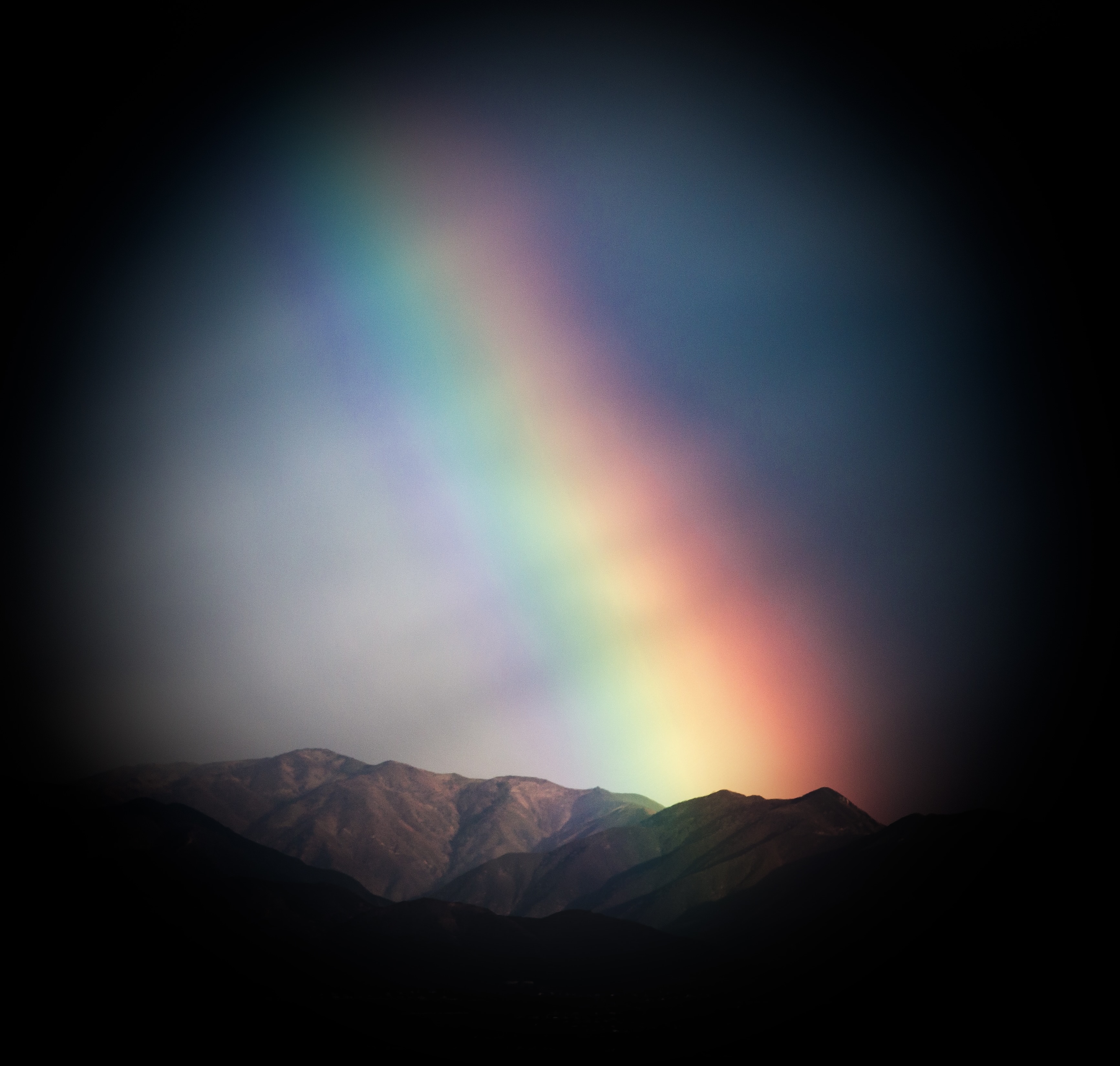
Color taps into the psychology of aesthetics and the nitty gritty of herbal chemistry. Just as a colorful meal appeals to the appetite of the eye, colorful herbs increase the beauty and diversity of meals and herbal elixirs. The flowering time is well on it’s way. I currently see yellow daffodils, red tulips, pink and white magnolias, yellow and white mustards. The white snowdrops and purple crocuses are gone. After April showers, May flowers bring a good time to consider the chemicals that color the world, especially those that end up on our plates and in our herbal elixirs.

Although All is One teaches that everything in the human body is interconnected and integrated, herbs tend to have direct relationships with the major body systems. This will not be a simplified version where herbs are put into satisfying little boxes, but will demonstrate how herbs often have overall body effects even while they have direct influence on an organ. Despite what an herb is “supposed to do,” it may not have that effect at all depending on individuals, their patterns, and their current state. Midsummer brings us deep into the flowering time, June berries, and the longest day of the year.
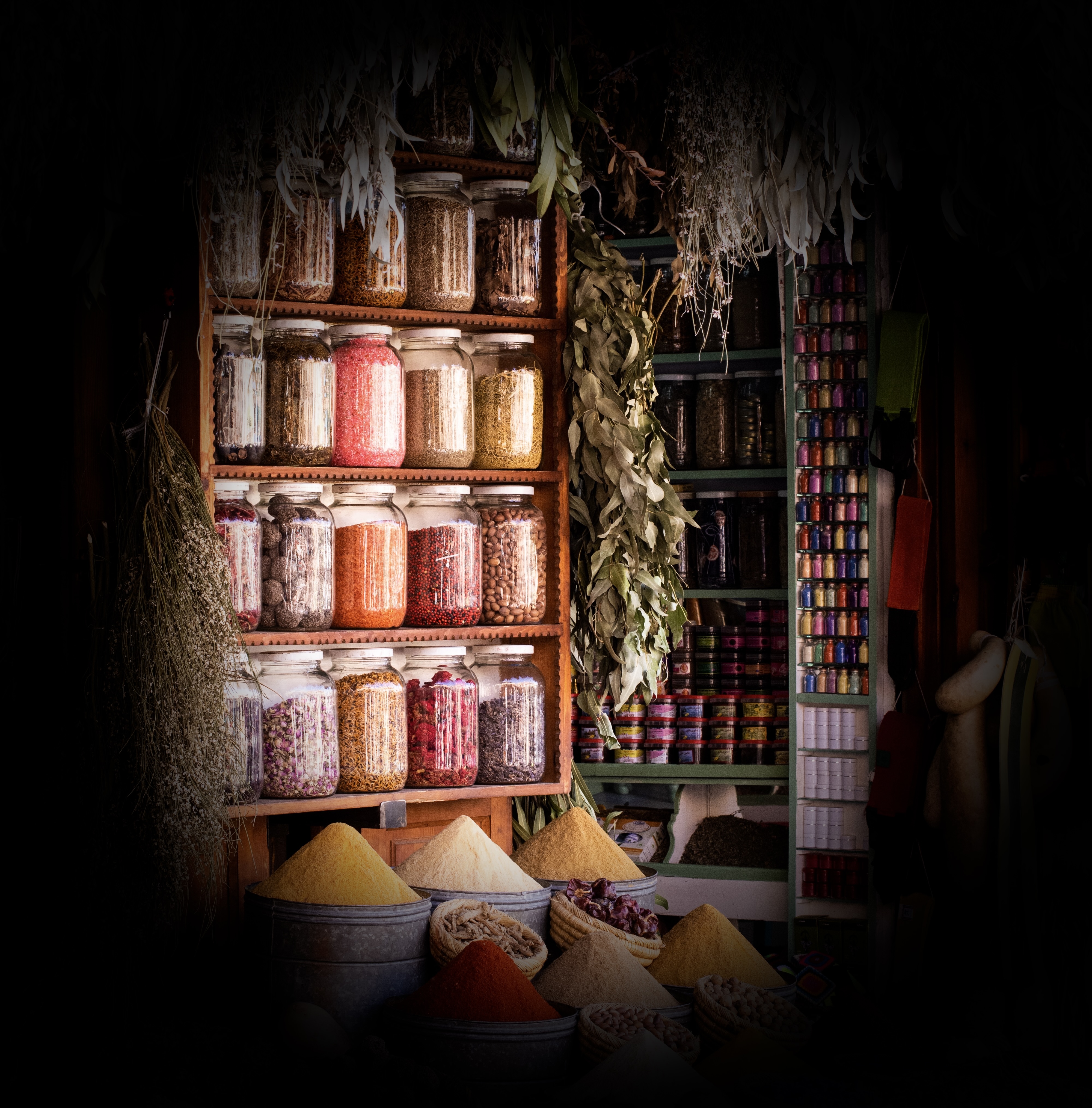
Cravings often point to patterns and deficiencies. Ten Tastes will start with the four tastes that correlate with the four elements of Southern Appalachian Folk Medicine that I learned from Phyllis Light and will end with the ten tastes promoted by David Winston. What a person craves, favorite foods, and taste aversions are useful to understand what the spirit, mind and body need. Taste is a useful tool for assessment and choosing herbs. This section will improve your herbal cooking skills along with learning to assess for individual formulations of teas and other concoctions. July is a time of flowers and fruit, heat, and remembering how to stay cool.

The Four Elements in herbal traditions include whether a person tends to express the element in its truest form or has a tendency toward deficiency or excess in that element. This will help clarify the sense that a person has two elements, or even three elemental tendencies, and how to narrow it down to one of the Twelve Combinations for a simpler approach. August means we're moving into the last of the summer days with an eye turned to the actual or literal harvest. A time for gathering, preserving, and distilling our foods and our inner being.

Synthesis is a session where we put all of the pieces together. Combine these principles into a practical assessment tool for choosing herbal (and other strategies). In September, the days and the nights are similar in length as the Fall Equinox approaches. A good time to plan a return to roots, whether medicinal roots, ancestral roots, genetic roots, internal roots. Ground yourself and prepare for cooler days.

Methods for using herbs (sometimes called methods of delivery) are infinite, but some work better than others depending on the need. Recipe combinations are infinite, but also require finesse and precision to provide appropriate and predictable effects. The Infinite Possibilities will provide strategies for choosing methods and formulating herbs to provide personalized effects whether in the kitchen or the apothecary. October is a time to gather yourself up and plan your herb plans for the winter. The end of the month marks the return to celebrating ancestors.
Refund policy: This course is run with small groups to provide low student-teacher ratios, which means that the budget is maxed out. Once the course starts, costs are incurred and refunds are no longer available.