Trillium Center/Art of Resilience: Seasonal Gardening

  • Free

Art of Resilience: Seasonal Gardening

We created an email-based seasonal gardening guide for NE Ohio, because living deeply in a place means knowing a bit about the non-human communities and how they interact with each other. The seasonal gardener learns to watch plant communities and wildlife when making decisions about when to do what.
Starts January 29.
Beets by congerdesign from Pixabay 

Contents

WELCOME!

You have joined "The Art of Resilience: Seasonal Gardening" - an online garden resource for the Great Lakes region. The Art of Resilience is a resilience media project started by the Trillium Center. The project includes free online resources and a podcast at http://www.trilliumcenter.org/resilience.

As you go through, pay more attention to the seasonal indicators in your area than the month we list, because every place is a little different and every year is a little different.
WHAT
WHY
WHERE
WHEN
WHO

Seasonal Gardening: February


With the ground covered in snow and winter temperatures perhaps hitting some seasonal lows, February is actually the perfect time to begin some hands-on garden preparation. Key seasonal indicators, garden tasks, and seed starting suggestions are listed here with more information at the link below. 

Seasonal Indicators

  • Days noticeably longer with about ten hours and twenty minutes of light

  • Nice views of the constellation Orion at nightfall

  • Perhaps the coldest and snowiest conditions of the year

  • Look for winter bird migrants such as snow goose, tundra swan; redhead, canvasback, common goldeneye, and bufflehead ducks; snow bunting, tree sparrow, and dark-eyed junco; snowy owl

  • Wildlife tracks in snow

  • Dropped deer antlers and deer browse on woody plants

Garden Tasks 

  • Get growing area and containers set up

  • Purchase or exchange any additional seeds you may want

  • If you’re into planning, draw out your garden beds so you know how many seeds to start

Seeds to Start Indoors

  • Rosemary

  • Thyme

  • Oregano

  • Savory

  • Bulb onions and shallots


Seeds to Stratify

  • Echinacea 

  • Common Milkweed

  • Apple

  • Lavender

Seasonal Indicators
Garden Tasks
Early Seed Starts

Seasonal Gardening: Early March


"Getting the sugar shack ready! We tapped on February 22 and it's time!" ~ Leah Wolfe, Conneaut, OH

For gardeners (and many other people who can’t wait for the end of winter) early March is full of anticipation. Indoor seed starting and care will be ramping up in the next couple months so it’s a good time to get organized before the flurry of garden activities begins. Key seasonal indicators, garden tasks, and seed starting suggestions are listed here with more information at the link below. Our schedule is set up so that we are sending you info at least a week ahead of time so that you actually have time to plan for each step.

Seasonal Indicators
  • Daylength increases quickly, gaining about 2 minutes and 45 seconds everyday 
  • It still feels like winter with cold temperatures and snow
  • Red maple buds are swelling
  • Sap run
  • Skunk cabbage flowers
  • Wood ducks become active; several duck species, such as green winged teal and American wigeon begin migrating through to their nesting areas
  • Continued signs of “starvation diet” for woodland mammals

Garden Tasks 
  • Organize seeds
  • Make a list of plants (or seeds) needed
  • Start sowing seeds in earnest!


Seeds to Start Indoors
  • Slow-growing herbs if you haven’t already started (rosemary, thyme, oregano, savory)
  • Leeks and bunching onions
  • Artichoke and Cardoon
  • Celery


Collaboration
Comments and questions are welcome! Shared observances, experiences, and lessons learned lead to more resilient gardens. Rustbelt Roots hopes that in the long run this will contribute to community resilience!
Seasonal Indicators
Garden Tasks
Seeds to Start Indoors

Seasonal Gardening: Late March


Nothing compares to a few unseasonably warm days in March to build excitement about springtime. Birds are chirping, insects are buzzing and whirring. If you’re excited about getting the garden ready, be sure to avoid doing some things too early, and focus on the tasks that fit the seasonal indicators. Nothing is more disappointing than finding delicate seedlings frozen.  Overzealous seed planting is a sure sign of cabin fever. We are hoping to help you avoid those mistakes with these key seasonal indicators, garden tasks, and seed starting suggestions are listed here with more information at the link below. 

Seasonal Indicators
  • Around 12-hours of daylight 
  • Returning bird migrants: Red-winged blackbirds, turkey vultures, robins, timberdoodle
  • Bird behaviors change
  • Tree buds swelling
  • More wildlife (and human) activity
  • More farm animals out

Garden Tasks 
  • Don’t clean up your garden yet
  • Gather greens
  • Mulch
  • Last chance for tree pruning
  • Spring greens!

Seeds to Start Indoors
  • Peppers
  • Eggplant & maybe Tomatoes
  • Broccoli & other Brassicas
  • Sage
  • Flowers with small seeds like florist’s blue balloon flower, petunia, bee balms, yarrow 

Seeds to Direct Sow (if soil can be worked)
  • Fava beans
  • Peas
  • Radishes
  • Spinach
  • Spring garlic
  • Dill 
  • Arugula
Seasonal Indicators
Garden Tasks
Seeds!

Seasonal Gardening: Early April

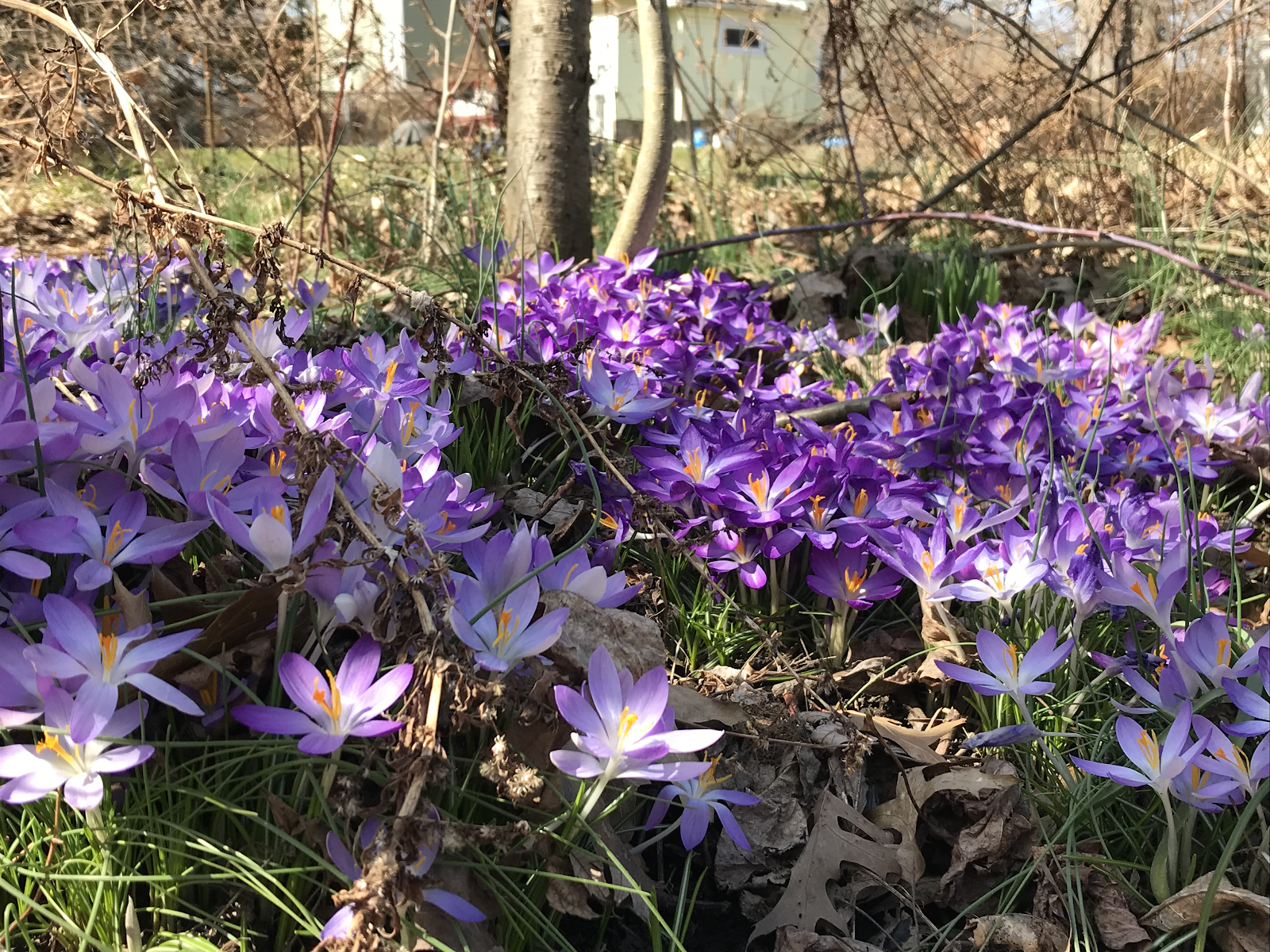
Crocus in bloom. Photo by Sarah Brower, March 21, 2021. 

It’s spring! A very warm and dry spring. It’s finally spring, and while our recent weather feels more like late spring or even early summer, seasonal indicators show we’re just coming out of winter. Red and silver maple trees have been blooming for a couple weeks now, and catkins (flowers) have emerged from quaking aspen, big tooth aspen, and some willows. Honey bees have been active on crocus blooms. Some daffodils are already blooming and other spring bulbs like hyacinth and puschkinia are shooting up and about ready to bloom. Many edible backyard weeds are up and some are flowering already. Look for purple dead nettle, ground ivy, yellow rocket, black medic, curly dock, and broad leaved dock. Hairy bittercress is already going to seed! Key seasonal indicators, garden tasks, and seed starting suggestions are listed here with more information at the link below. 

Seasonal Indicators

  • Trees are blooming: red and silver maples, hazelnuts, willow family trees
  • Spring bulbs coming up or flowering: crocus, daffodil, tulip, hyacinth, puschkinia, Star of Bethlehem 
  • Weeds - purple dead nettle, ground ivy, yellow rocket, hairy bittercress, black medic, docks, dandelion 
  • Wood frogs and spring peepers
  • Birds are staking out territories and nesting. House wren is back, chimney swifts and swallows; water/shore birds: greater and lesser yellow legs, green herons, black-crowned night herons; first warblers: yellow-rumped, palm, yellow, common yellowthroat

Garden Tasks 

  • Start hardening off seed starts
  • Spread compost
  • Mulch
  • Set up trellises and structures for climbing plants
  • Early weeding

Seeds to Start Indoors
  • Tomatoes
  • Basil
  • Brassicas: kale, collards, cabbage, etc.
  • Calendula, marigolds, Mexican mint marigold
  • Other larger seeded flowers like borage, nasturtiums, zinnias, love-in-a-mist, nicotiana, coreopsis, daisies 

Seeds/Propagules to Direct Sow

  • Potatoes
  • Peas
  • Brassicas
  • Beets
  • Carrots
  • Onion sets
  • Spinach
  • Cilantro
  • Arugula
  • Radish
Seasonal Indicators
Garden Tasks
Seeds to Start

Seasonal Gardening: Late April

Plants and trees are exploding with growth now. Trees are well on their way to being leafed out and several species are in full bloom. Spring ephemeral wildflowers have been blooming in the woods and it’s already time to harvest several garden crops. Plants seem to be a bit ahead of schedule this year, and hopefully it won’t cause problems for orchards and fruit growers since it wouldn’t be northeast Ohio without some late April snow and frost. Key seasonal indicators, garden tasks, and seed starting suggestions are listed here with more information at the link below.
 
Magnolia and cherry trees in bloom. April 14, 2021. Sarah Brower.

Seasonal Indicators

  • Trees/shrubs are blooming: forsythia, cherries, peach, plums, magnolias, pear; apples look ready to bloom very soon 
  • Forest trees are partially leafed out
  • Woodland spring ephemeral wildflowers: ramps, spring beauties, trout lily, cut-leaf toothwort, mayapples
  • Weeds - cool season grasses, dandelions flowering on sunny days, violets, lambs quarters sprouted 
  • Gray tree frogs have started singing
  • Birds arrivals: white-throated sparrow, chipping sparrow, eastern phoebe, osprey
  • Turkey breeding


Garden Tasks 

  • Transplant cold-weather crops started in February and March: artichokes, celery, onions, cabbage, kale, broccoli, cauliflower
  • Continue to harden off frost-sensitive plants
  • Harvest greens, asparagus, brassica flower heads, green onions, chives
  • Early weeding and bed preparation


Seeds to Start Indoors

  • Indoor seed sowing is mostly finished, but it can still be worthwhile to start perennials


Seeds to Direct Sow

  • Peas
  • Brussels sprouts and cabbage
  • Beets
  • Carrots
  • Spinach
  • Cilantro
  • Dill
  • Arugula
  • Radish
Seasonal Indicators
Garden Tasks
Seeds Starting

Seasonal Gardening: May

Late season snow and cold temperatures made for a slow start to the month of May, but it appears that the danger of frost has passed. All but the latest bloomers of trees are just about fully leafed out. It’s a peak time for watching and hearing backyard and woodland songbirds. Emergence of mayflies near bodies of water signals the start of insect season, which this year includes the emergence of the extremely numerous 17-year cicada in nearby areas. This all means that it’s one of the busiest times in the garden for transplanting plant starts and direct sowing warm weather crops. Key seasonal indicators, garden tasks, and seed starting suggestions are listed here with more information at the link below.
Chive flowers with blue flax, bok choy, kale, and purple deadnettle flowers in the background. May 17, 2021.  Sarah Brower.


Seasonal Indicators

  • Days are really long with about 15 hours of light
  • Most trees are just about fully leafed out
  • Night time temperatures are now consistently above 50°F
  • Bird activity: Baltimore and orchard orioles at backyard feeders; peak time to see over 20 species of warblers; new bird songs in the woods and backyard: gray catbird, wood peewee, wood thrush, red-eyed vireo
  • Deer fawns are out foraging
  • Mayfly emergence and associated bird activity  
  • Green frogs and bull frogs have added their songs to the chorus of gray tree frogs
  • Rhododendrons, azaleas, hawthorns, and lilacs flowering
  • Weeds - annual ragweed, daisy fleabane, lambs quarters, wood sorrel, sheep’s sorrel, red clover
  • Overwintered kale, bok choy, arugula, mustards, bunching onions, and chives flowering
  • Strawberries are flowering and buds swollen on blackberries and raspberries
  • Buds on roses, peonies, 


Garden Tasks 

  • Transplant plant seedlings!
  • Petal-fall applications of neem and kaolin clay to fruit trees
  • Water 1st-year trees and garden plants through dry spells


Seeds to Direct Sow

  • Bush and pole beans
  • Cucurbits: cucumbers, squashes, zucchini, melons, etc.
  • Corn
  • Basil
  • Sunflowers
  • Carrots
  • Beets
  • Cilantro and dill
Seasonal Indicators
Garden Tasks
Seeds to Direct Sow

Seasonal Gardening: Late Summer

Now that I am bushwhacking through the weeds to find and pick my first tomatoes (which are also out of control), I realize that this is the time when I start planting my fall garden. As I pull weeds (setting some aside to put in the dehydrator, like wild amaranth and lambs quarters, other weeds are used as mulch around vegetables as long as they haven't gone to seed), I plant seeds in the freshly turned soil. Last year's Brassicas, such as kale, broccoli, and collard greens, have gone to seed. I may have mentioned that I'm a lazy gardener, so I just let the brassicas and other plants like red amaranth and calendula self-seed right where they are. As the potatoes come out, seed potatoes go right back in. The rest of this lesson was written by Sarah, because I admit that my life has been filled with my new job as the interim executive director at the Conneaut Arts Center. Between that and the garden, I have time for little else. But planning such things as the Loch Erie Monster Show and an interactive gallery to map the historic Port District in Conneaut has been fun and challenging. So stay tuned for more emails on planting a fall garden, learning more about overwintering plants, and maybe a little on planning for the spring. Oh, and if you're interested in the Loch Erie Monster Show, check it out at conneautartscenter.org/events

Leah Wolfe
Herbalist & Community Educator
trilliumcenter.org * rustbeltroots.org


Seasonal Gardening Intro to Late Summer

These are the dog days of summer and the dog days of gardening season too.  The weather is sultry, bugs and pests abound, and everything seems overgrown.  Day length is slowly decreasing, hardly noticeable yet, but marks a key time to prepare the fall garden.  Seasonal indicators, garden tasks, and seed starting suggestions are listed here with more information at the link below.

Being observant during the peak of insect season will be rewarded with some beautiful and bizarre discoveries such as these Poecilochirus mites that are riding a grapevine beetle to a new food source.  Photo by Sarah Brower.


Seasonal Indicators

  • Day length is less than 15 hours and will drop below 14 hours before the second week of August
  • Daytime humidity very high and hot temperatures (when it’s not raining) 
  • Huge diversity and abundance of insects in yards, gardens, natural areas, indoors
  • Unmowed areas are high, and weedy wildflowers are blooming: chicory, Queen Anne’s lace, buttercups, yarrow, thistles, daisies, milkweeds, St. John’s wort
  • In less disturbed fields or restored prairies many species blooming: black-eyed Susans, purple and green-headed coneflowers, compass plant, coreopsis, bee balm and wild bergamot, blazing star
  • Insectivorous birds very active: swallows, chimney swifts, kingbirds, flycatchers
  • Male deer antlers almost full size
  • Time for ripe blackberries, blueberries, peaches


Chicory and Queen Anne’s lace, a common sight along roadsides this time of year.  Photo by Kenneth Spencer <https://creativecommons.org/licenses/by-nc-sa/2.0/>


Garden Tasks 

  • Harvest!
  • Collect and clean seeds
  • Weed and mulch
  • Fertilizing heavy feeders
  • Continue pruning and training tomatoes
  • Sow fall crops
  • Water during dry spells


Seeds to Direct Sow

  • Bush and pole beans, it’s not too late!
  • Carrots
  • Lettuce
  • Cabbage
  • Kale
  • Spinach
  • Arugula
  • Broccoli
  • Peas
  • Beets
  • Turnips
  • Bunching onions
  • Fall radish: daikon, watermelon
  • Cool season herbs: dill, cilantro, fennel

Read on for some seasonal gardening tips!
Seasonal Indicators
Garden Tasks
Seeds to Direct Sow

Seasonal Gardening: September


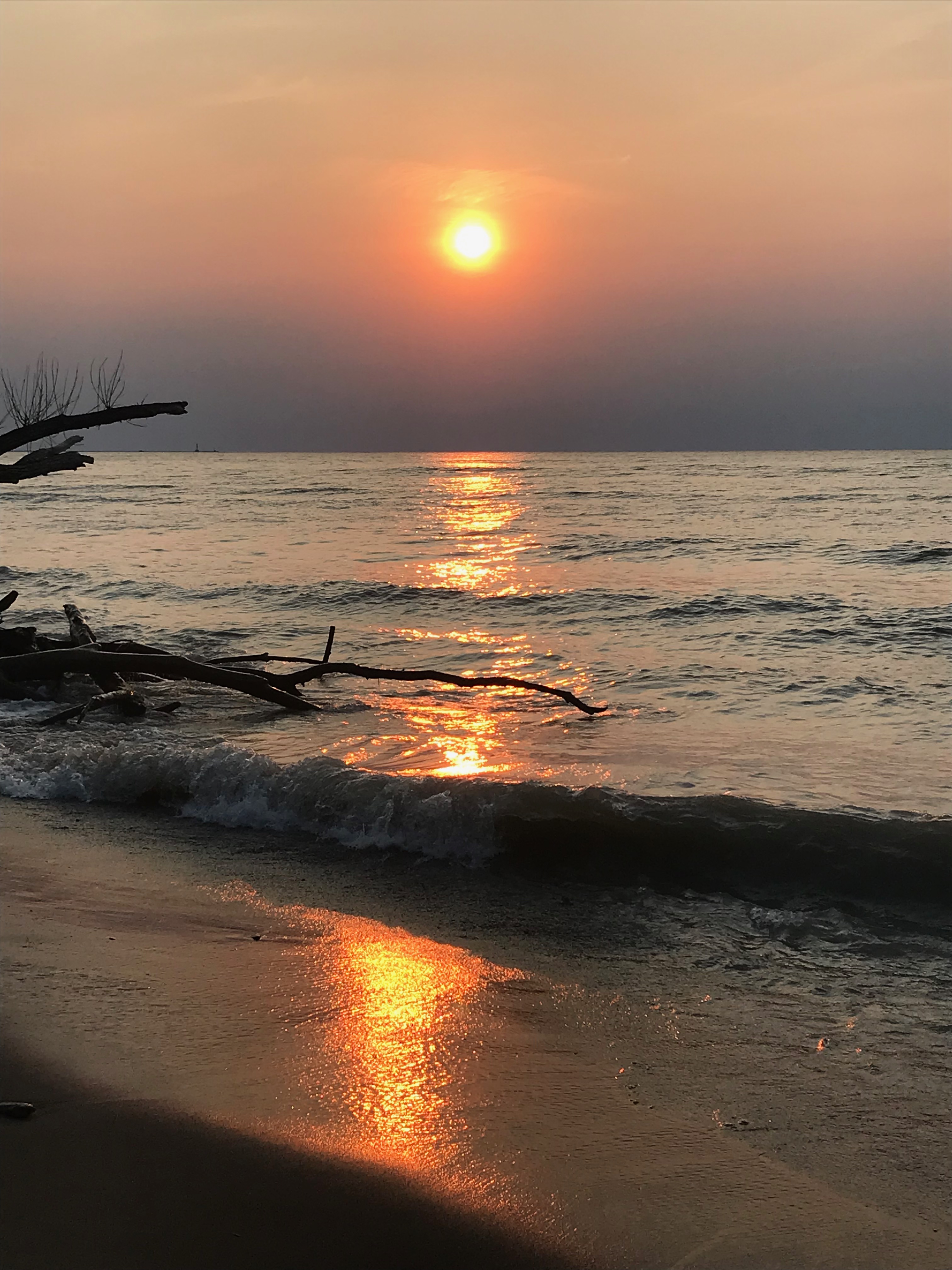
September Sunset over Lake Erie. Photo by Leah Wolfe.

It’s hard to believe summer is coming to an end, but shorter days are a welcome relief from the sultry dog days of summer for some of us. Others may experience an occasional pang of melancholy for the cold, dark days to come. Soon we’ll be able to slow down and enjoy the fruits (and vegetables) of our labors long into the colder months. 

In the garden, things are slowing down: weeds, pests, plant growth, and garden tasks. As the light shifts and the goldenrod and asters bloom, plants, insects, and animals (including human animals) shift their energy toward getting through the darker days of winter. 

At this time of year, energy is focused in the kitchen for the vegetable gardener. Preservation of the harvest might be challenging. How to get all the canning, pickling, fermenting, freezing, and drying done before rot takes over!? 

To help you prepare for a nourishing winter, it might help to watch for seasonal indicators, prioritize garden tasks, and plant a few seeds for the autumn garden.

Seasonal Indicators

  • Autumn equinox: equal parts day and night (12 hrs) with day length continuing to decrease. This is the beginning of the period of time when the veil between "reality" and the spirit world is thin with the holidays of Halloween, Samhain, All Hallow's Eve, and Day of the Dead coming in the next months. 
  • Cooler days, and especially nights, with less humidity
  • Cool season plants starting to thrive again: kale, mustards, fall radish, other Brassica species; peas and fava beans; dandelions start blooming again
  • Fall wildflowers: goldenrods (did you know there are 30+ goldenrod species in NE Ohio?), New England asters, several species of white asters in fields, white snakeroot, horse balm, and large-leaved aster in the woods 
  • Seed and berry eating birds very active: goldfinches, cardinals, sparrows, cedar waxwings 
  • Beginning of deer mating season: look for tree rubbing, and be careful on the road - when hunters begin staking out their haunts, deer and other animals are more active and using unusual routes.
  • First leaves starting to turn red on tupelos and some maples, while others begin to bleach
  • Late summer edible mushrooms: chicken-of-the-woods (aka sulfur shelf), hen-of-the-woods (aka maitake), lion’s mane 


Chicken-of-the-woods mushroom on a downed log. Photo by Sarah Brower


Garden Tasks 

  • Harvest and preserve
  • Collect and clean seeds
  • Prepare garlic beds
  • Find a balance between mulching and leaving standing vegetation

Seeds to Direct Sow

  • Lettuce
  • Spinach
  • Arugula
  • Mustards
  • Dill
  • Cilantro

Read on for more info!
Seasonal Indicators
Garden Tasks
Seeds to Direct Sow

Seasonal Gardening: Autumn

Autumn colors in Ashtabula. Photo by T Gallo.

One of the most cloying scents in the air is the smoke of those lighting their wood stoves for the first time. As the sun makes shorter appearances, many bring the element of fire indoors by lighting candles and fires to acknowledge the change in season. Brush is burned to provide ash to lightly spread through garden beds. Autumn feels like a good time of year to clear away the things we no longer need as life shifts to the interior on physical and mental levels. It is a time to celebrate the harvest, prepare for the short and dark days, and anticipate the inevitable winter storms.

Part of the changing climate in northeast Ohio seems to be a longer and later growing season, the closer to the lake you are the more pronounced this might be. The lake remains warm while the ambient temperatures drop. Peppers, tomatoes, and eggplants may still be yielding quite a bit of fruit, and maybe you’re trying to figure out what to do with all those pumpkins and squash. Marigolds, calendula, and maybe some asters are still blooming. Meanwhile, it’s time to plant garlic and go on fall color hikes. Leaf color change and drop is perhaps the most obvious seasonal indicator of the whole year. Other more subtle indicators can help cue our appreciation of the last days of the growing and gardening season. 

Seasonal Indicators
  • More hours of darkness than daylight
  • Night temperatures getting low enough to damage tender plants like basil
  • Fall colors are reaching their peak vibrancy 
  • Oak, beech, hickory, and walnut trees beginning to drop fruits in large numbers - deer, squirrels, chipmunks, wild turkey are feasting
  • Black birds “massing” in preparation for migration
  • Many duck and songbird species that breed in Canada are returning to overwinter or are passing through on the way to southern overwintering grounds - many summer breeding species are migrating south
  • Deer mating season: more deer on the move and buck sightings more common
  • Armillaria (aka honey mushrooms) and giant puffballs are fruiting

Garden Tasks 
  • Plant garlic
  • Harvest certain fall crops like cabbage, Brussels sprouts, daikon/watermelon radish, turnips after a light frost or two
  • Pumpkins and squash are ready to set out on porches to ripen and later move to shelves to store through the coming months 
  • Gather dandelion flowers for a high potassium tea, dig up roots like yellow dock, dandelion, and burdock to use for high mineral teas  
  • Sheet mulch new beds, mulch existing beds and perennials

This is also a good time to check out Rustbelt Roots: How to Store Fresh Fruits & Vegetables.
Seasonal Indicators
Garden Tasks
Seeds