Text section
Contact me directly to sign up and set up your payment. The total cost of the course is $1255, which includes 6 in-person sessions, monthly webinars, monthly live online discussions, online reading materials and downloads, plus two books and a hand lens for identifying plants.
April 18 - Herbal Technique Workshop - Hydrotherapy, powders
May 16 - Field Trip - Plant Identification and Foraging Techniques
July 18 - Herbal Technique Workshop - Infusions, decoctions, cordials, syrups
September 19 - Field Trip - Plant Identification and Foraging Techniques
October 10 - Herbal Technique Workshop - Oil infusions, salves
November 14 - Tinctures, glycerites, vinegar infusions

Hi. I'm so glad you are here!
The Welcome section of this course provides vital touchstones for the course, such as suggestions for preparing for the course, my guide on herbal safety guide, the forms you'll use each month for the plant studies, and a short guide on foraging.
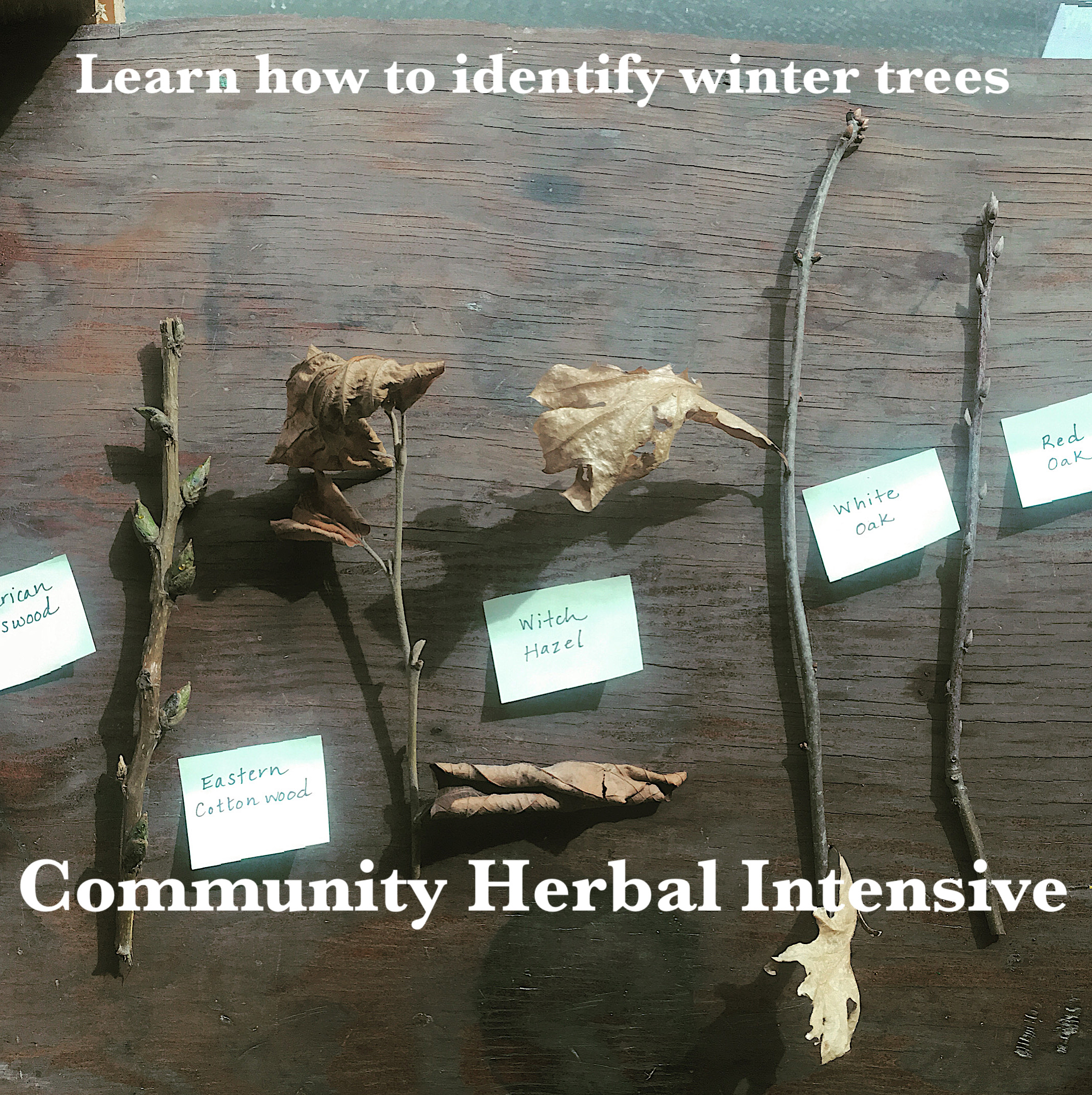
March is the month where we start seeing, or at least hope to see, signs of spring. I always start the intensive in March to demonstrate that even while most plants are still dormant, trees provide everything we need, especially in NE Ohio. The diversity of trees is incredible - an entire medicine cabinet in the forest. We will specifically study two trees, but I encourage to share your curiosity and knowledge about other trees.
April showers bring May flowers, as the saying goes. Where I live, April showers just bring more showers in May and probably some frosty nights, too.
In April we will start studying some of the first green things that pop up plus a common house plant: garlic, plantain, and aloe. Then on to digestion and detoxification.
April is a good time to start thinking about your herb project. Do you want to do a personal project? Work on something to integrate herbalism into your household? Or develop a community project?
We will also begin to move from tree botany to plant botany, with an emphasis on flowers. If you purchased a copy of Botany in a Day, awesome. If not, we'll be practicing this method at the first field trip and you can try to glean some info that way.
The final lesson in this section is about dosing. You will learn some basic methodologies on deciding on how much and how often an herb should be used. The more important question of which herb for which person will be covered during the remainder of the CHI because it involves many factors.
Enjoy the warmer days!
May flowers are here bringing an opportunity to learn more about looking at the botanical structure of flowers. Many plants are covered in flowers or already have leaves. With all of the green it can be an overwhelming time, and if you are a gardener, you might start finding it hard to know what you want to weed out and what you want to keep.
Happy Midsummer!
This is the time of early berries and many flowers. Get busy identifying flowers!
Materia medica includes a several plants to support the nervous system. Learn how they do this and how they fit into the herbs for Nerves, Brain and Eyes. And don't pigeon-hole them, remember that herbs almost always benefit multiple body systems or even have a full body effect.
The section on Nourishment is a reminder that you have to start with what you put in. If you eat the poison because you have the antidote, you're still eating poison.
Organize your thoughts for your project with a short assignment in the section called Getting Started. Please share your thoughts in the comments, who knows, maybe someone will give you some helpful ideas or inspiration!
Enjoy having a month off for the hot days of July!
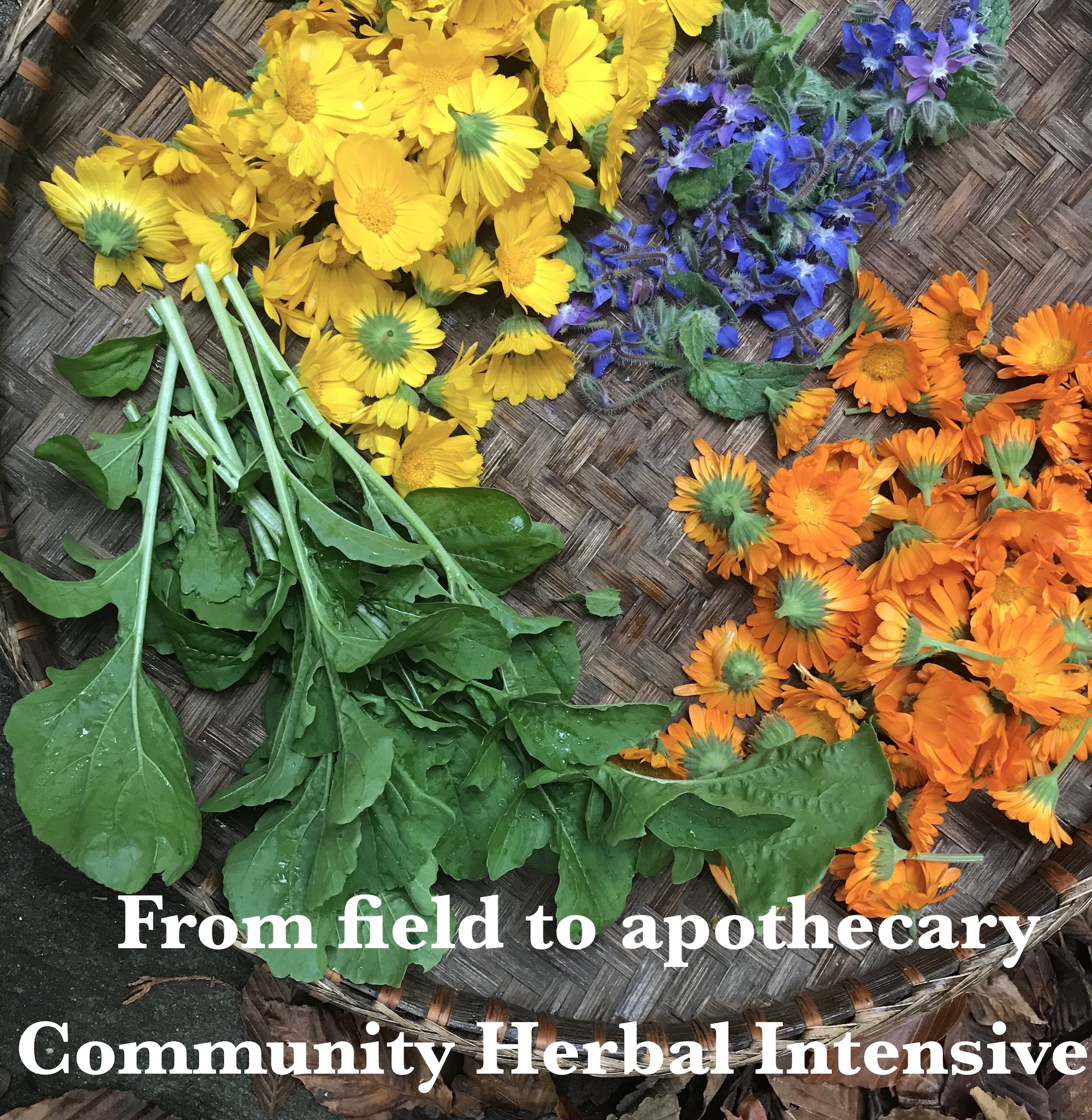
Wow! The dog days of summer. Humid, sultry, with wild thunderstorms... which bring mushrooms, berries, and August flowers.
Materia medica includes a several seasonal plants. They all have some contraindications and/or warnings, see what you can find.
The section on Taste is going to be fun after starting with Energetics, building a vocabulary around Herbal Actions, and then finding out that Taste helps bring it all together. I look forward to talking about this on our monthly call.
Fill out your project worksheets and share questions and/or ideas in the Comments.
And then take some time to learn about herbs to support immunity so you can be ready for the coming change of seasons!
See you soon!
We are approaching the time of year when the days and nights are nearly the same length. The Autumn Equinox marks the day that is the same length as the night. Then onwards to darker days and even darker nights. This time of year is about the harvest and preparing for winter, whether it's the holidays or long winter nights, work with herbs to help you find ways to stay engaged, nourished, and rooted.
Materia medica includes a several seasonal plants. Spend some time learning about them. Try to find them. Barberry is a common landscaping plant in NE Ohio that has successfully invaded the wild spaces. Calendula will bloom until a hard freeze. Motherwort is a common weed, use the flowers and seedpods. Seaweeds are not to be found here, except in grocery stores, but they help those of us living in the Great Lakes region where iodine deficiency is endemic.
Learn more about the mysterious and often erroneous Doctrine of Signatures and then skim through some ideas of Vitalism - it is an important perspective to consider as you develop a sense of how healing happens.
Fill out your project worksheets and share questions and/or ideas in the Comments.
And then take some time to learn about herbs to support the kidneys, bladder, adrenals, and your musculoskeletal system so you can be ready for the coming change of seasons!
See you soon!
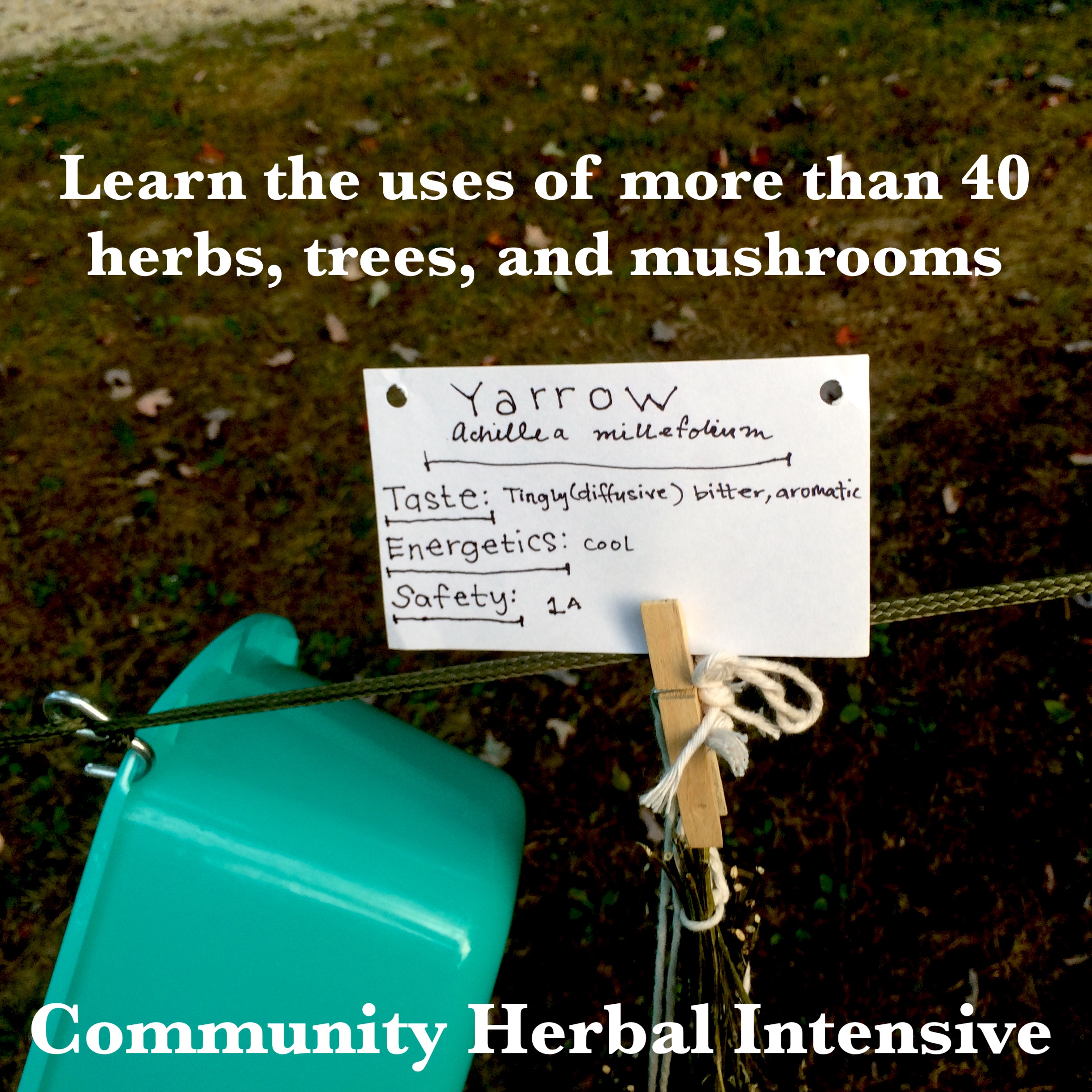
October is known for the second harvest, which is when the beer drinking celebrations of Oktoberfest begin. Take note of fall colors, which tree leaves turn which color? Don't forget colors in herbalism are important.
Materia medica includes a several seasonal plants. Sassafras is a native but weedy tree that was once used as the primary flavor for root beer. Rosemary will get your circulation going, but check out the warnings. Red clover is a slightly warming nutritive. Hawthorn is a common tree in most parts of the world, what common fruit is it related to?
This month's special topic explores color and a bit of phytochemistry.
Fill out your project worksheets and share questions and/or ideas in the Comments.
And then take some time to learn about herbs to support the circulatory system so you can warm up for cooler days
We're getting close to the end!
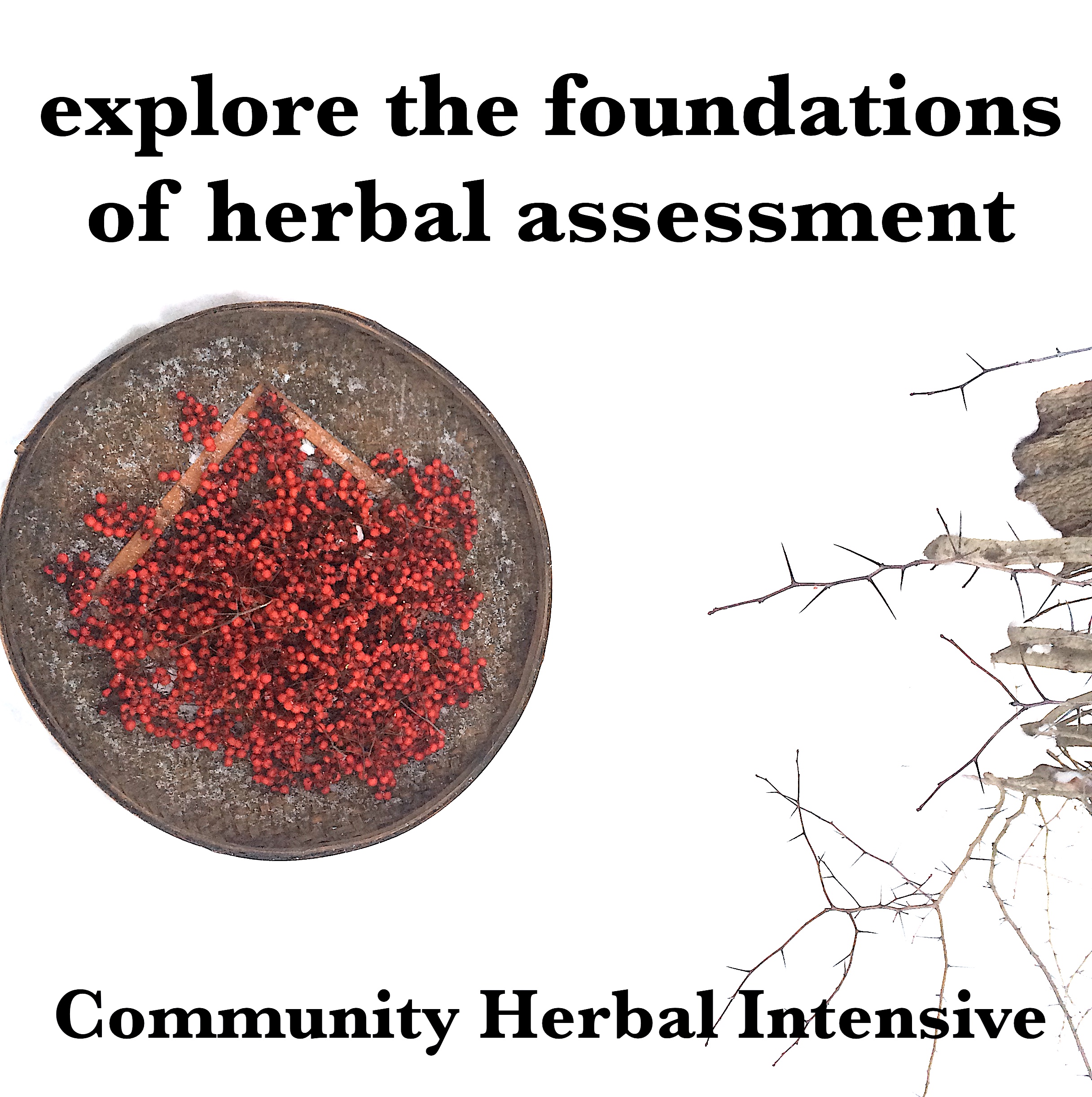
Winter is on its way!
This is the time to gather those greens and berries that improve after a frost and to dig up roots before the ground freezes.
Materia medica includes a several plants with very different uses. Do your research and learn how and when to use them.
The section on Vitalism and the Doctrine of Signatures gives some historical and philosophical perspectives to help you integrate tradition into your relationship with plants.
And the grand finale is here! This is your chance to share your project ideas with the group for ideas and thoughts.
Remember you can come back to this forum anytime to see new comments and share photos from your project!
Refund policy: This course is run with small groups to provide low student-teacher ratios, which means that the budget is tight. Refunds are not accepted after the course materials are released.